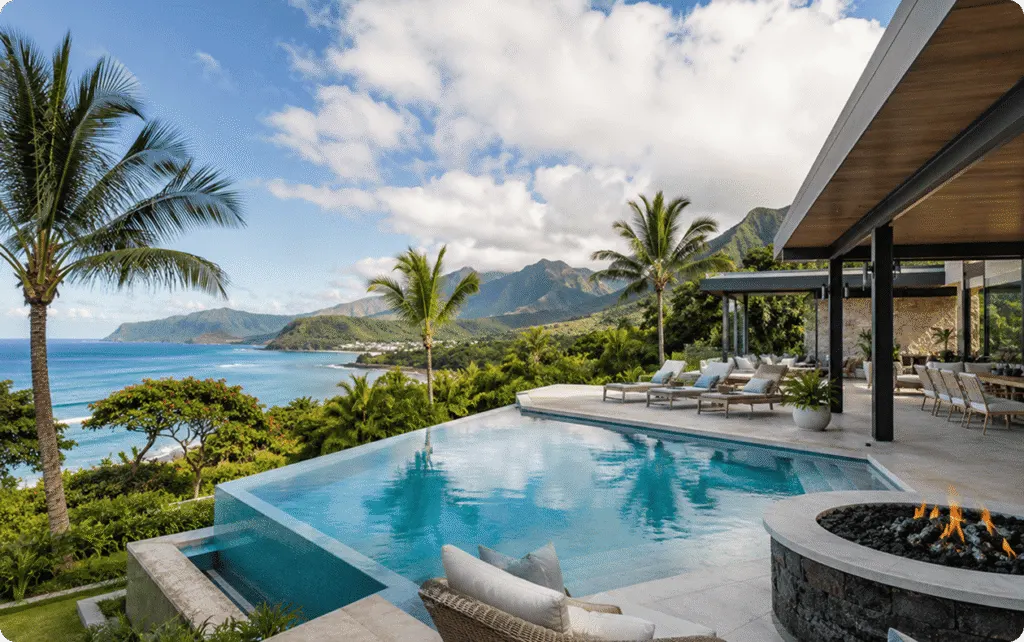


Mauritius offers much more than an idyllic tropical lifestyle: today, it stands as one of the most sought-after jurisdictions in the world for optimizing tax efficiency and structuring international wealth.
However, unlike generalist portals that often limit themselves to property listings without addressing growing tax complexities, our approach at DS Immobilier is founded on a core conviction: a high-performing wealth investment inextricably links real estate acquisition with a sound tax strategy.
Anchored at the heart of \the northern region of Mauritius, our experts break down the golden rules of tax residency and Mauritian real estate taxation for you.
1. Why combine Real Estate Investment and Tax Residency in Mauritius?
For many European or South African expats, entrepreneurs, and retirees, moving to Mauritius answers a dual ambition: securing a high-value tangible asset while settling in a low-tax country.
Unlike other destinations where real estate and taxation are treated separately, Mauritius allows you to obtain a permanent residency permit directly through the acquisition of an eligible property (via PDS or Smart City schemes). It is a direct bridge between real estate investment and the protection of your income.
2. How to become a Tax Resident in Mauritius?
Tax residency status is not automatically granted simply by purchasing a property, unless the investment meets the regulatory thresholds set by the Economic Development Board (EDB).
- The 183-day Rule: Any individual who stays in Mauritius for a total period of 183 days or more during a tax year, or a cumulative period of 270 days over the two preceding tax years and the current year, is considered a Mauritian tax resident.
- Residency Permit through real estate: Purchasing a property valued at a minimum of 375,000 USD within an approved program (PDS, Smart City) automatically grants you the right to apply for a permanent residency permit, allowing you to live on the island without a minimum presence requirement if you choose.
3. Conditions for obtaining residency
| Permit Type / Status | Main Access Condition | Investment / Required Threshold | Validity and Advantages |
| Residency via Real Estate | Purchase in a PDS or Smart City program | 375,000 USD | Permanent, valid as long as you own the property (spouse and children included). |
| Retired Permit | Aged 50 or over | Transfer of min. 1,500 USD / month (or 18,000 USD/year) | Valid for 10 years, renewable. Allows you to spend your retirement in the sun. |
| Professional / Investor Permit | Business creation or local employment contract | Turnover or initial investment depending on activity | Ideal for entrepreneurs and executives active on the island. |
4. Mauritian Taxation: A haven for investors?
The appeal of Mauritius relies on a modern, transparent, and highly advantageous tax system, without being an opaque tax haven (the country has signed numerous double-taxation treaties, notably with France).
- A single flat tax rate of 15%: Personal income tax is capped at 15%. The same applies to corporate tax.
- Absence of heavy taxes:
- No wealth tax (IFI).
- No inheritance tax or direct-line gift duty.
- No capital gains tax on property sales.
- Freedom of repatriation: No exchange controls on capital, dividends, or rental income remitted abroad.
5. The hybrid legal framework: absolute security for Your asset
One of the major deterrents to investing abroad is the fear of legal insecurity. In Mauritius, this risk is eliminated thanks to a unique hybrid judicial system:
- The rules governing real estate property, contracts, and successions are based on the French Civil Code, providing a familiar environment for French-speaking investors.
- Public institutions, business law, and the highest court of appeal (the Privy Council in London) rely on the tradition of British Common Law, ensuring flawless transparency and rigor regarding land titles.
6. The DS Immobilier advantage: A women-Led, tailor-made approach
Faced with impersonal generalist portals, the DS Immobilier team supports you far beyond the mere signing of the sales deed:
- A global wealth vision: We analyze your tax and estate goals to target properties in the North (Grand Baie, Pereybere, Cap Malheureux) that offer the best returns and perfect eligibility for residency permits.
- A network of expert partners: We connect you with top-tier tax specialists, notaries, and bankers to streamline the process of obtaining your tax residency.
7. Frequently Asked Questions (FAQ)
If I become a tax resident in Mauritius, am I taxed on my worldwide income?
In Mauritius, tax residents are only taxed on their foreign income provided it is remitted to a Mauritian bank account. Income received and kept abroad escapes local taxation.
Does buying a G+2 apartment grant tax residency?
Purchasing a property under the G+2 scheme allows you to buy without a minimum price threshold, but the permanent residency permit is only granted if the total investment reaches at least 375,000 USD.
Is there a tax treaty between France and Mauritius?
Yes, a double-taxation agreement is in force between France and Mauritius, thereby preventing double taxation on the same income and precisely governing the status of expatriates.
In Summary: Secure your future in Mauritius
Want to finalize a real estate investment while optimizing your taxation? Let our team of experts design a tailor-made strategy for your project.
Contact DS Immobilier today or submit your custom property search to start your transition with complete peace of mind.